Nothing New in the Can? Give People Something New to Care About.
The KFC–Pepsi split should prompt a bigger conversation about how established brands create fresh relevance.
By Rob Douglas, Co-founder & CEO, Left Off Madison
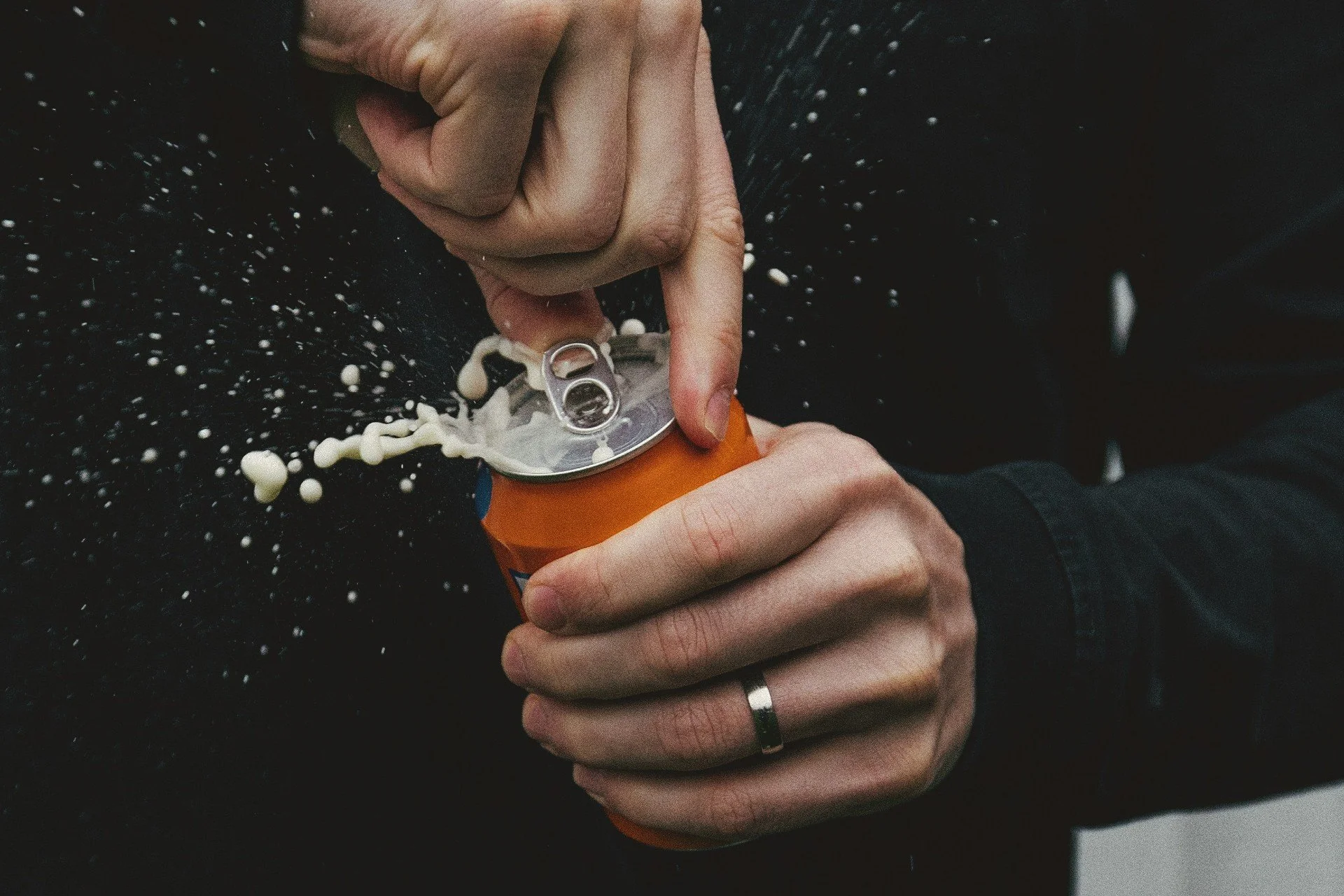
Photo: Joshua Earle
When Reuters reported that KFC was switching its U.S. restaurants from PepsiCo to Coca-Cola, my first reaction was personal: “I just don’t understand PepsiCo. Is it me, or are they invisible?”
Advertising peer Peter Saluk pointed to the history behind the relationship. PepsiCo once owned KFC. The connection survived the restaurant business’s 1997 spinoff. Now, Coca-Cola products are scheduled to reach KFC’s U.S. restaurants by spring 2027, although PepsiCo’s relationships with Taco Bell and KFC International continue.
That is a striking change. It is not, by itself, proof that Pepsi’s advertising failed. We do not know the commercial terms that determined the decision.
But it raises a question worth asking well beyond soda: What are you giving people to care about when your product hasn’t meaningfully changed? In fact, we’ve written about this before:
Attention Is Not the Same as Brand Momentum
Stop Selling the Product. Start Selling What It Means.
The Funnel Isn’t Broken. Demand Creation Is.
PepsiCo certainly spends money. Its worldwide advertising expense totaled $3.4 billion in 2025, down from $3.9 billion in 2024. Those figures include its food and beverage portfolio; they do not tell us what Pepsi, Mountain Dew or Starry individually received. Spending on those seems like nill to me.
And my feeling of invisibility is not a market measurement. Pepsi ran a Taika Waititi-directed Super Bowl commercial this year, launched Pepsi Prebiotic Cola nationally and partnered with Drybar. There is advertising, product innovation and collaboration happening.
The question is whether those efforts add up to a compelling place in people’s lives — and a stronger reason to buy.
A new flavor can give people something to try. A meaningful brand idea can give them a reason to keep choosing.
Marketers should be pursuing both.
Mountain Dew’s own history (a PepsiCo brand) offers a useful reminder. In 1999, it became the exclusive beverage sponsor of the inaugural Gravity Games, the NBC-backed competitor to ESPN’s X Games.
The strategic lesson goes beyond putting a logo beside a skateboard ramp. Action sports gave the brand a setting in which its personality made sense: energy, individuality, risk and participation.
That is the kind of connection marketers should be looking for.
Where does the brand belong?
What can it contribute?
What could its resources help people build?
Sprite offers another instructive example. It featured Kurtis Blow in a national television commercial in 1986, then launched “Obey Your Thirst” in 1994. Its association with hip-hop developed over years.
Hip-hop was already commercially significant by 1994. The lesson is not that Sprite discovered an obscure fad. It is that the brand recognized cultural importance, worked with credible voices and kept showing up.
Consistency matters. So does understanding the difference between borrowing someone’s popularity and earning a place with their audience.
I have approached that challenge from several directions in my own career.
With 7UP, the Orlando Jones campaign gave the brand a mischievous, self-aware personality. The creative opportunity did not depend on a new product formula. It came from making a familiar brand entertaining again.
With Hawaiian Punch, we explored hip-hop through fashion and the visual possibilities of Punchy. My relationships with Steve Rifkind and colleagues at Loud Records helped us develop that direction. The opportunity was specific: connect an existing brand character with a culture’s creativity and self-expression.
With LG Mobile, we started from the insight that a phone was also a fashion accessory. That led us into Hollywood, music, fashion and art, putting devices in the hands of people who could make them part of a desirable lifestyle.
With Just Bare chicken, the connection was different. We focused on health-conscious consumers willing to spend more on food quality. The work had tangible support: packaging information about the poultry’s origin and actual growers who could help tell the story.
More recently, with Technics, we brought earbuds and headphones into contemporary golf culture through our work with Hypegolf. Music, fashion and a changing golf audience gave us a relevant setting in which to introduce the brand.
These are examples of strategic choices, not interchangeable recipes. A direction that makes sense for chicken will not necessarily make sense for soda. The work is finding the connection that the particular brand can credibly sustain.
Collaboration can help.
Look at Malbon. Its collaborations have crossed fashion, entertainment and sport, with partners including Jimmy Choo, New Balance and Curb Your Enthusiasm. And, fittingly for this discussion, Coca-Cola.
I would challenge a brand team to develop three thoughtful collaborations over a year, each serving a clear commercial purpose. One might introduce the brand to new buyers. Another might create a new occasion. A third might strengthen its relationship with an existing community.
Each should contribute to the same recognizable brand idea.
A collaboration calendar alone proves nothing. There needs to be a route from interest to purchase: available product, a relevant occasion, a credible offer and a way to measure incremental demand. Social content is a useful output. It is not the business case.
The same discipline applies to emerging passions.
Perhaps the opportunity is in a local cycling community, a particular outdoor scene, a creative workshop or a new expression of an established sport. Those are places to investigate, not recommendations to approve from a conference room.
Start small. Meet the organizers. Listen to participants. Find out what they value and what they lack. A national brand might contribute equipment, space, funding, distribution or exposure that helps something worthwhile grow.
Then test whether the relationship also helps the brand grow.
This requires marketers and agency leaders to get their hands dirty.
AI can help organize research, identify signals and generate hypotheses. It cannot replace the relationships, firsthand observation and judgment required to understand why a community matters—or whether your brand is welcome.
Go to the event. Visit the shop. Talk to the people making things. Spend time somewhere that is not organized around your marketing calendar.
And bring what you learn back into the advertising. Give the creative team something more revealing than a trend report and permission to make work people might actually seek out, remember and share.
None of this excuses an uncompetitive product, poor distribution or the wrong price. But waiting for R&D to deliver your next interesting sentence is an abdication of marketing’s job.
Your product does not have to be new for your brand to give people a new reason to choose it.
Finding that reason—and turning it into demand—is what marketers and their agencies are paid to do.