Retail Media Without Brand Building Is Just Expensive Shelf Rent
Retail media is booming, and for good reason.
It promises something modern marketers crave: proximity to purchase. Better shopper data. Cleaner sales linkage. More tangible evidence that media is connected to commerce outcomes. In an environment where every dollar is scrutinized and every budget conversation eventually circles back to accountability, retail media has become one of the most seductive parts of the modern marketing mix.
And in many ways, it deserves the attention.
Retail media can be smart. It can be effective. It can absolutely play an important role in driving sales, defending presence, reinforcing choice, and improving performance in moments that sit close to transaction.
But none of that changes a more important truth:
Retail media is not a complete growth strategy.
And the more it grows, the more dangerous it becomes when marketers treat it like one.
That is the issue.
Too many marketers have started asking retail media to do more than it was ever meant to do. They are not just asking it to close demand. They are asking it to create demand. They are not just asking it to reinforce choice. They are asking it to build the meaning, memory, trust, and preference that should have been built long before the shopper ever got to the shelf, the retailer site, or the sponsored product unit.
That is where retail media starts to become less of a growth accelerator and more of a crutch.
At Left Off Madison, we believe growth beats optics. And retail media can create a lot of optics. It can create dashboards that look sharp, reports that look accountable, and enough commerce activity to make teams feel like they are doing the right thing. But visibility at the point of purchase is not the same thing as brand strength. And proximity to transaction is not the same thing as creating demand.
Why retail media keeps winning budget
To understand the problem, it is worth acknowledging why retail media keeps pulling in more investment.
It lives close to the sale.
It often feels more measurable than traditional upper-funnel channels.
It gives brands a way to act where consumer decisions are actively being made.
And in many cases, it is attached to retailers that already have enormous influence over distribution, merchandising, and shopping behavior.
That combination is powerful.
For brands under pressure, it can feel like the safest place to put money. If growth is slowing, if leadership wants answers fast, if sales teams are anxious, if retailers are applying pressure, retail media appears to offer the cleanest path to action.
That is precisely why it gets overused.
Because once marketers start prioritizing only what sits closest to conversion, they begin to confuse the point of sale with the point of brand building.
And those are not the same thing.
Shelf presence is not the same as brand presence
This is the distinction too many marketers miss.
We’ve heard it from start-ups and emerging brands to 100-year old establishing multi-brand portfolio companies.
A shelf can help close the sale.
A sponsored product unit can increase visibility.
A retailer search result can improve discoverability.
An in-store placement can influence the final decision.
All of that matters.
But none of it, by itself, can fully substitute for the harder work of building a brand upstream.
If a consumer does not already know who you are, trust you, remember you, understand why you are worth the money, or feel some degree of preference toward you before they enter that commerce environment, then retail media is being asked to carry far too much weight.
In that scenario, the brand is not using retail media to accelerate existing momentum.
It is using retail media to compensate for missing momentum.
That is a very different thing.
And it gets expensive quickly.
Because when the upstream work is weak, the lower funnel has to work unnaturally hard just to keep the machine moving. The shelf has to do more. The sponsored placements have to do more. The retailer search unit has to do more. The promotion has to do more. The shopper messaging has to do more.
The entire commerce layer becomes overburdened.
The result is often a familiar pattern: rising dependence on retail support, greater pressure to defend shelf position, increased sensitivity to promotions, more questions about incrementality, and an uneasy feeling that the brand is busy, visible, and spending — but not actually getting stronger.
That is not healthy growth.
That is maintenance disguised as momentum.
We have seen this play out in real life
This is not theoretical for us.
We have seen a CPG client devote roughly $10 million per year to shopper marketing behind three established brands. For the past two years, that was essentially the only meaningful marketing investment those brands received.
No real upstream brand-building effort.
No serious awareness-driving media support.
No sustained consideration-driving communications.
No meaningful pressure on memory, trust, or preference outside commerce environments.
Just shopper marketing. Again and again. Year after year. With the expectation that the shelf, the sponsored product unit, the retailer search result, and the in-store placement would somehow do the whole job.
They did not.
Those three brands are not growing household penetration in our tools or as reported in their quarterly and annual finance reports.
In fact, they are losing.
Why?
Because shopper marketing was expected to do the work of brand building that was never sufficiently funded upstream.
That is the trap.
Someone sold them the fiction that shopper marketing could do it all. That if the brand showed up aggressively enough in retail environments, if the sponsored placements were strong enough, if the on-site support was consistent enough, if the shelf activity was loud enough, the brands would grow.
But shopper marketing does not do it all.
It never did.
Shopper marketing can influence choice near the point of purchase. It can support conversion. It can help reinforce intent. It can capitalize on existing familiarity or preference. But it cannot replace the slower, broader, messier work of building that familiarity and preference in the first place.
And when marketers pretend otherwise, they end up paying heavily for a lower-funnel machine that is compensating for weak brand demand rather than benefiting from strong brand demand.
The lie at the center of the retail media boom
The most dangerous thing about retail media is not that it is ineffective.
It is that it is effective enough to encourage over-belief.
It works often enough, visibly enough, and close enough to sales that marketers start assigning it powers it does not actually have.
That is when the story becomes dangerous.
Because once brands believe lower-funnel commerce environments can replace upstream brand building, they begin to starve the very work that makes lower-funnel efforts more productive in the first place.
They cut awareness support.
They underfund consideration.
They reduce investment in storytelling, memory, differentiation, and trust-building.
And then they look to retail media to cover the gap.
That gap never fully gets covered.
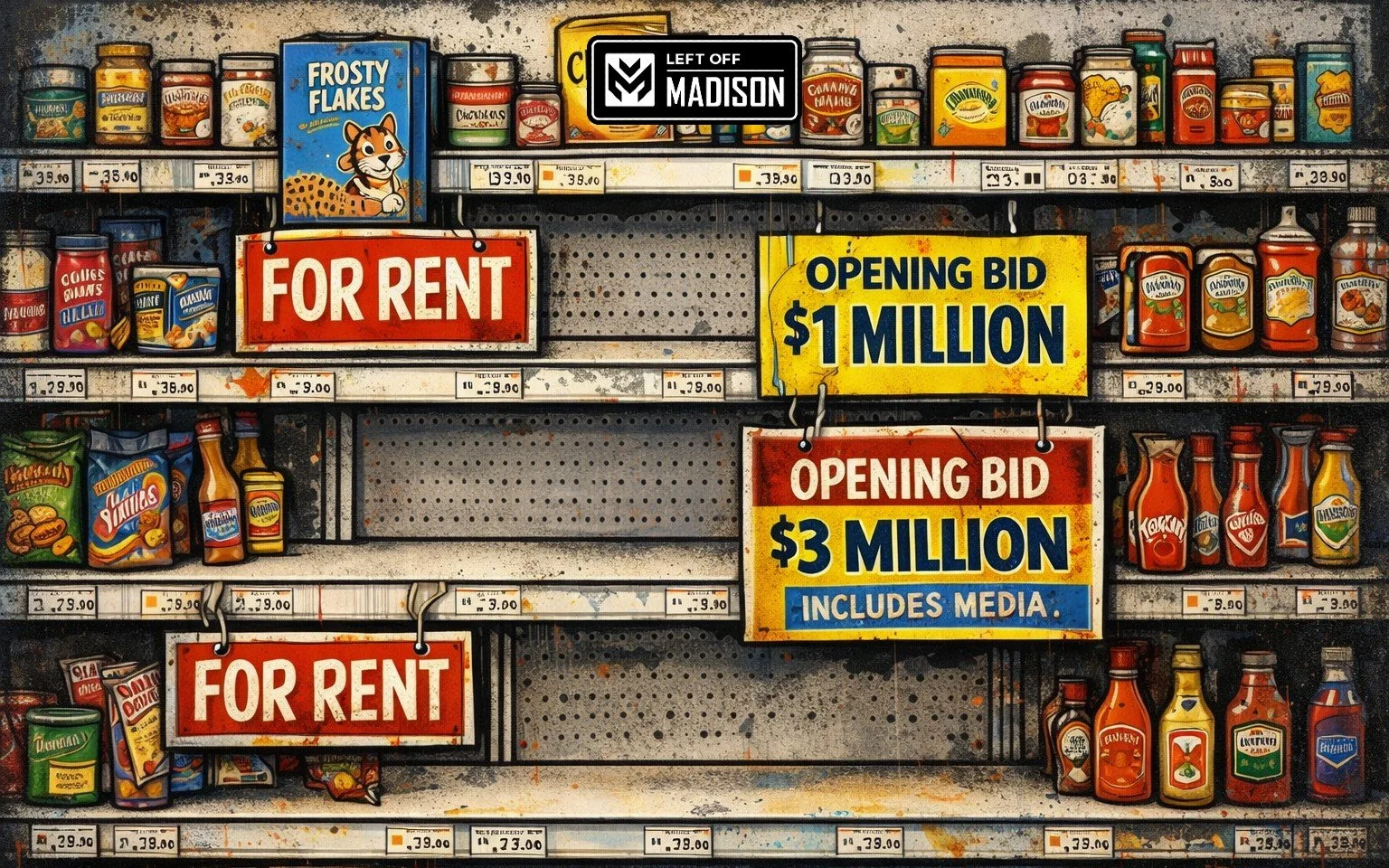
Instead, the retail layer gets more and more burdened. The brand becomes more dependent on retailer-controlled environments. The economics become less forgiving. And the brand starts renting attention at the shelf instead of earning preference before the shelf.
That is why we call it expensive shelf rent.
Because at that point, you are no longer simply using the shelf to close a sale. You are paying the shelf to make up for a brand weakness that should have been addressed elsewhere.
Retail leverage makes the problem worse
There is another uncomfortable truth here: many marketers do not engage retail media from a position of total freedom.
Retailers have power.
They influence visibility, placement, discoverability, and promotional dynamics. They control environments that can materially affect brand performance. Marketers know that. Sales teams know that. Leadership teams know that.
So what starts as strategic investment can slowly become defensive investment.
A brand does not just spend because the opportunity is attractive. It spends because it feels pressure not to lose ground.
That is where dependence sneaks in.
And once a brand becomes dependent on retail environments to sustain performance, it becomes much harder to tell whether the investment is fueling real growth or simply preventing decline.
That distinction matters enormously.
A strong retail media program should help a strong brand get stronger.
It should not be the main device keeping an underbuilt brand from slipping faster.
Why lower-funnel commerce cannot replace demand creation
This is the heart of the argument.
Retail media is part of the funnel. It is not the whole funnel.
It is closer to conversion, which is exactly why it is useful. But that also means it has less room to do the emotional and strategic work that earlier stages of brand building are designed to do.
Awareness creates familiarity.
Consideration shapes preference.
Brand building strengthens trust, distinctiveness, and recall.
Conversion environments capitalize on that groundwork.
When marketers reverse that logic and ask conversion environments to create the very demand they are supposed to harvest, performance starts to flatten.
That is when brands say things like:
“We are spending a lot, but not feeling stronger.”
“We are visible, but not growing penetration.”
“We keep investing, but the brand still feels vulnerable.”
“We are everywhere at retail, but it is not compounding.”
Exactly.
Because presence near purchase is not the same as relevance before purchase.
And the brands that win sustainably understand that retail media works best when it is attached to a larger growth system.
At Left Off Madison, that is exactly how we think: strategy, media, creative, and production working as one integrated engine. Not isolated tactics pretending to be strategy. Not shopper marketing standing in for brand building. Not retail media being asked to impersonate the entire job.
What smart marketers should do now
The answer is not to walk away from retail media.
The answer is to right-size it.
Use retail media to reinforce demand, not invent all of it.
Use it to support conversion, not replace brand creation.
Use it to strengthen commerce performance, not excuse weak upstream investment.
And ask harder questions:
Are we using retail media to accelerate a brand that is already building demand, or to prop up one that is not?
Are we investing enough in awareness and consideration to make the commerce layer work harder?
Are we growing household penetration, or just paying to maintain visibility?
Are we confusing retailer-controlled presence with actual consumer preference?
Are we building a brand that earns the sale, or one that keeps renting the right to compete for it?
Those are the questions that separate mature marketers from reactive ones.
Because in the end, retail media is not the villain.
Overreliance is.
The takeaway
Retail media deserves its place in modern marketing.
But it does not deserve to be mistaken for the whole thing.
When brands ask the shelf, the sponsored product unit, the retailer search result, or the in-store placement to do the work of brand building they failed to fund upstream, they are not creating a stronger growth model.
They are creating a more fragile one.
And if household penetration is flat or declining despite heavy shopper investment, that should tell you something important:
The commerce layer is doing all it can.
The missing work is happening earlier.
Without brand building behind it, retail media stops being a growth accelerator and starts becoming exactly what too many brands are now paying for:
Expensive shelf rent.
This post is dedicated to Kimeko McCoy at DIGIDAY who has tirelessly written about retail media networks.