What marketers can learn from Technics × HypeGolf
Most brands still think sponsorships create cultural relevance.
They don’t.
Visibility is not the same thing as belonging.
What made Technics successful inside HYPEBEAST’s HypeGolf wasn’t logo placement, celebrity seeding, or traditional event sponsorship mechanics. It was understanding that modern culture is built through participation, identity, and environmental integration.
Here are five lessons marketers can take from the Technics × HypeGolf collaboration.
1. Don’t Sponsor Culture. Embed Yourself Inside It.
Too many brands approach cultural marketing like an interruption: logo here, signage there, maybe a social post.
That’s not how modern communities work.
Technics succeeded because the brand became part of the actual environment:
the music
the energy
the sensory atmosphere
the social content
the in-store behavior
the after-party
the conversations
The products weren’t treated like “product demos.”
They became part of the broader lifestyle experience itself.
That distinction matters.
Modern consumers — especially culturally influential ones — can instantly feel the difference between a brand that shows up and a brand that belongs.
2. The Most Valuable Audiences Are Often Smaller, More Influential Tribes
Mass reach is overrated if the wrong people are seeing it.
HypeGolf represented something far more valuable: a concentrated group of tastemakers shaping where golf culture is heading next.
Fashion.
Music.
Design.
Nightlife.
Streetwear.
Creative professionals.
Young affluent consumers.
The objective wasn’t “reach golfers.”
The objective was: reach the people redefining what golf means culturally.
That’s a very different strategy.
The brands that win over the next decade won’t simply target demographics.
They’ll identify emerging identity-based communities before competitors recognize their value.
3. Physical Experiences Create Stronger Brand Memory Than Digital Ads Alone
Digital media creates awareness.
Physical environments create emotional memory.
The Clubhouse worked because Technics wasn’t confined to a booth or banner:
the DJ setup became a visual centerpiece
the speakers shaped the atmosphere
the earbuds became part of discovery and conversation
the turntables became social content magnets
People didn’t just see Technics.
They experienced the brand spatially, emotionally, and socially.
That creates a very different kind of brand imprint.
Especially in an era where consumers scroll past thousands of ads per day.
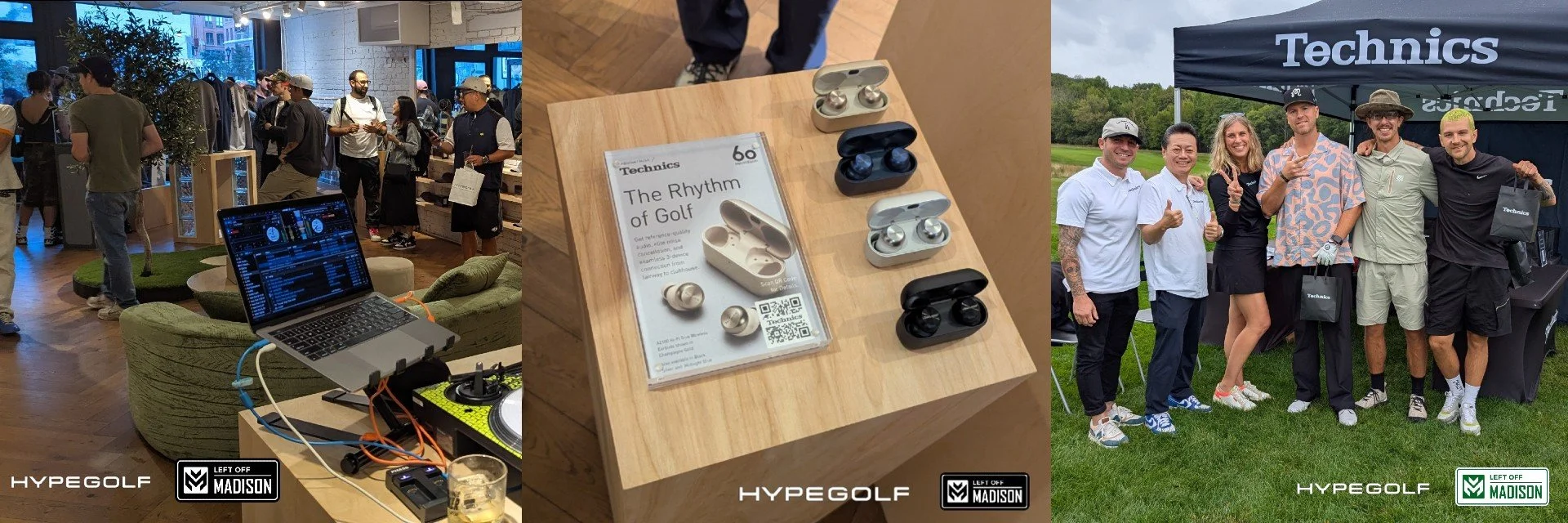
(L-R) View from behind the Technics DJ booth inside the HypeGolf club house. Technics display inside HypeGolf clubhouse. Three DJs — Jayceeoh, rhêtorík and TGUT alongside Technics executives.
4. Cultural Adjacency Can Be More Powerful Than Traditional Targeting
One of the hidden strengths of the activation was who Technics appeared alongside:
adidas Originals Golf.
Oakley.
Lexus.
Malbon.
Johnnie Walker.
Fashion creators.
DJs.
Creative executives.
This matters because premium perception is often built contextually.
Consumers judge brands not only by what they say about themselves — but by the environments, people, and brands surrounding them.
In many ways, cultural adjacency acts like modern-day luxury signaling.
The smartest brands today curate ecosystems, not just campaigns.
5. The Future of Brand-Building Is Participation, Not Advertising
The strongest modern brand activations no longer feel like marketing.
They feel like access.
Community.
Identity.
Participation.
Status.
Discovery.
That’s what happened here.
Technics didn’t force itself into golf culture.
It amplified a movement already happening.
That’s a major difference — and one many brands still miss.
The result was not simply impressions or engagement.
It was something harder to manufacture: cultural credibility.
And in crowded premium categories, cultural credibility often matters more than media weight.
Why This Matters Beyond Golf
This wasn’t really a golf story.
It was a case study in how premium brands can:
enter emerging cultural spaces authentically
build relevance without chasing trends
create stronger emotional association
connect lifestyle and commerce
generate organic content behavior
position products as identity signals rather than utilities
That applies far beyond audio.
Fashion.
Automotive.
Hospitality.
Luxury.
Spirits.
Travel.
Consumer electronics.
Financial services.
Even B2B brands trying to build modern relevance.
The brands growing fastest right now aren’t simply advertising more aggressively.
They’re integrating themselves into culture more intelligently.
Explore the full Technics × HypeGolf case study
See the creative assets, cultural execution, experiential environment, and partnership strategy that helped transform Technics into part of modern golf culture.
What Happened Next Matters.
Since Technics’ deeper push into modern golf culture — including its HypeGolf activation — the brand has continued expanding its presence within the sport, most notably through a new multi-year partnership with the PGA TOUR and PGA TOUR Champions as Official Audio, Official Headphones, and Official Earbuds partner through 2029.
While Left Off Madison is not involved in the PGA TOUR partnership itself, we believe the earlier capitalization on modern golf culture and the HypeGolf partnership helped demonstrate something important:
Golf was evolving culturally.
And premium audio had a meaningful role to play within that evolution.
What began as a culturally driven experiment inside modern golf culture ultimately helped show how sound, sport, lifestyle, and premium identity could intersect in ways traditional sponsorship models often miss.
In many ways, the PGA TOUR partnership signals something larger: the continued mainstreaming of the modern golf movement that brands like Technics recognized early.
Left Off Madison
The Agency CMOs Call When Growth Is Non-Negotiable
One Agency. Every Capability. Zero Ego.