People Know Your Brand. What’s Making Them Choose It?
Five questions to ask before your next campaign, product launch or push for growth.
By Rob Douglas, Co-founder & CEO, Left Off Madison

A follow-up to Starbucks Forgot Why People Stayed. Local Coffeehouses Didn’t., building on Attention Is Not the Same as Brand Momentum.
Your next customer may already know your name.
They may have seen the campaign, watched the video, visited the website and noticed your product on the shelf.
And still chosen someone else.
That is where the marketing conversation needs to get more interesting.
In our Starbucks article, I argued that brands need to protect the experience that makes customers choose them. The question now is how to identify those reasons and turn that understanding into decisions that move the business forward.
Our earlier piece on attention and brand momentum made a related point: visibility can rise while the business remains under pressure. More people looking is useful. What they do next determines how much that attention is worth.
Before commissioning the next campaign, adding another channel or pushing a new product into market, I would ask five questions.
The examples below draw from Left Off Madison’s work as well as our leadership team’s experience before founding the agency. Across very different categories, they show how understanding people changes the assignment.
1. What triggers the purchase?
Start with the moment someone becomes willing to act.
“People who own cars” describes a market. It tells you very little about why someone would replace wheels that work perfectly well.
For ASR Motorsport, beautiful aftermarket wheels were only part of the proposition. The opportunity was the owner looking at a vehicle and thinking: this should feel more like mine.
The ambition could be a more imposing truck, a more distinctive luxury car or a classic restored with a particular look. Those are different expressions of identity, and they call for different products and presentations.

A set of Trek model wheels from Arena Wheel on a Ford Bronco.
ASR’s pre-launch investment in putting wheels on vehicles helped make that ambition visible. A wheel photographed alone shows the design. A wheel on the right vehicle helps an owner imagine the transformation.
That understanding shaped how we approached brands including Arena Wheel Co., Select Precision Alloys and Resto Wheel Co. The starting point was the owner’s desired outcome.
Explore the ASR Motorsport case study.
National Debt Relief presented a very different moment of readiness. Someone under financial pressure may know help exists and still hesitate to pick up the phone. Shame, skepticism and uncertainty can stand between awareness and action.
Our television work emphasized empathy, humanity and the possibility of moving forward. The job was to make asking for help feel more approachable. In our experience on the assignment, the response became strong enough that the campaign had to pause while the call center caught up.
That last detail matters: creating demand and being ready to serve it belong in the same conversation.
Explore the National Debt Relief case study.
Ask your team: What happens in someone’s life that makes our offer relevant today?
2. Why choose your brand over the alternatives?
Give people a reason they value—and a reason to believe it.
A new chicken brand faces an obvious challenge: shoppers already have options, routines and familiar names.
For Just Bare, competing with established brands such as Perdue and Tyson required a proposition with substance. Food traceability and the actual growers became important parts of the story. They gave people something tangible behind the promise of quality.
The emotional payoff was confidence in the food they were putting on the table. The product truth made that confidence credible.
Explore the Just Bare case study.
Other categories required a different route to preference.
In our leadership team’s earlier work on 7UP, “Make 7UP Yours” restored an irreverent personality to a familiar brand. Humor gave people a fresh way to relate to it. For Western Union, the connection centered on family: sending money could be an expression of care and a way to remain present in loved ones’ lives across distance.
The functional job still mattered. The emotional meaning made it more personally relevant.
Explore 7UP and Western Union.
Ask your team: Could a customer explain why they chose us without repeating our tagline?
3. Where does that reason become convincing—or disappear?
Follow the promise all the way to the purchase.
A campaign may make a product desirable. The next encounter has to help the customer act on that desire.
Consider Ajinomoto Gyoza. The creative connected the product with the pleasure of preparing and sharing food. “Cook ’em. Flip ’em. Enjoy ’em.” made the preparation part of the appeal.
But the assignment also required people to remember the product, understand how to prepare it and know where to buy it. The work included instructional content, media focused on the relevant Costco markets and advertising with a store-finding function.
The dinner-table moment gave the product meaning. The supporting work helped connect that meaning to a shopping trip.

Still extracted from the Ajinomoto Gyoza TV spot
This is where the Starbucks lesson becomes operational. A welcoming promise needs a welcoming place to sit. A reassuring food claim needs credible evidence. A camera’s creative promise needs demonstrations that help buyers picture what they could make.
Walk through your own customer journey. Does the product page answer the question raised by the ad? Does the retailer carry the promoted item? Can someone understand the offer without doing homework? Does the service experience deliver the care your campaign promises?
Every handoff can strengthen the reason to choose you—or introduce doubt.
Ask your team: Where are we asking customers to take a leap that our experience should help them make?
4. What keeps an interested person from buying?
Find the hesitation before deciding that more exposure is the answer.
Price and availability matter. So do language, trust, uncertainty and the emotional weight of a decision.
For Cadillac, our team’s work with affluent Chinese Canadian prospects extended into Chinese-language advertising and websites. The opportunity involved presenting luxury, achievement and self-expression in ways that were relevant to the audience, while maintaining the masterbrand’s identity.
The campaign outperformed the cited English-language benchmarks on click-through and video completion. Those are useful engagement results; they also illustrate why the path into a brand deserves as much thought as the reach of its advertising.
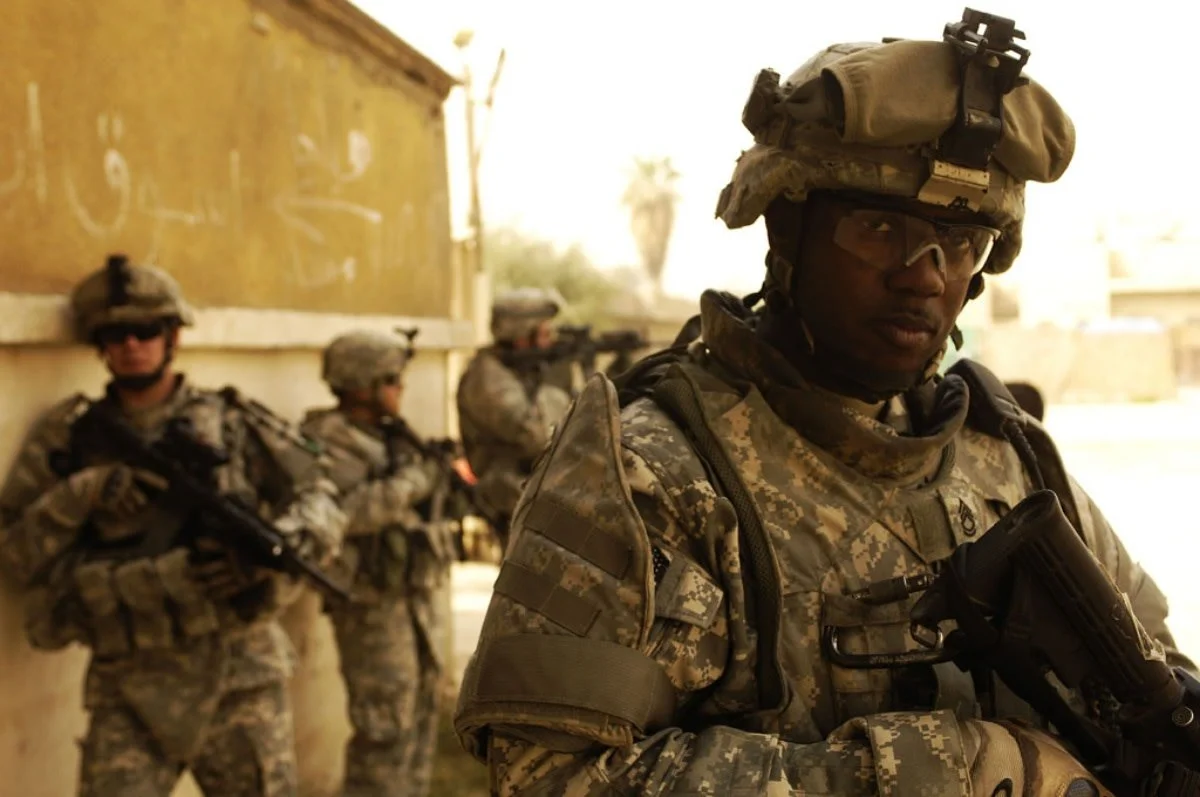
U.S. Army soldiers
For the U.S. Army, research identified concerns among African American parents about the risks their children might face. The work brought greater attention to education, leadership and career opportunity through credible voices and stories. Understanding the concern changed what the communication needed to address.
Explore the U.S. Army case study.
For the 9/11 Memorial & Museum, the challenge was especially sensitive. Many New Yorkers already understood the significance of September 11. Visiting could mean confronting personal memory and grief.
Our work focused on local audiences, proximity, intent and civic pride, with the objective of encouraging a visit. The case reports increases in local admissions quarter over quarter. Respect for the audience’s relationship to the subject was essential to the assignment.
Explore the 9/11 Museum case study.
An unanswered concern can survive a thousand impressions.
Ask your team: What might someone need to understand, trust or feel comfortable with before taking the next step?
5. What would demonstrate progress?
Define the business outcome before celebrating the campaign result.
The appropriate measure depends on the job.
For Caesars Entertainment, our team’s work with Chinese, Vietnamese and Korean audiences focused on reasons to visit and return: dining, entertainment, rooms and the wider hospitality experience. People already knew the properties offered gaming.
The Total Rewards program provided a way to examine recency, frequency and monetary value. Those measures put customer behavior at the center of the conversation. Our case study reports that revenue growth among Asian American guests was twice the general-market rate during the work described.
Explore the Caesars Entertainment case study.
For Ajinomoto Gyoza, the commercial test was sales sufficient to support Costco shelf space and expansion. The launch reached 2.6 times the required sales level within two weeks and later 3.8 times, according to our case study. Those are sales results—not a separately measured first-time-buyer conversion rate. They demonstrate the retail performance the assignment needed.
Our leadership team’s earlier dnL launch offered another example: an emotionally distinctive idea had to generate enough demand to meet launch objectives. Creative novelty needed a commercial result behind it.

Melia Hotel property
For Meliá Hotels, the question extended beyond how many bookings the marketing generated. Where those bookings happened mattered. Reliance on online travel agencies brought commission costs and limited the direct customer relationship at booking.
Encouraging direct bookings and participation in the rewards program gave travelers a reason to engage with Meliá itself. The broader assignment connected customer value with the economics of the booking channel.
Explore the Meliá Hotels case study.
These businesses needed different definitions of progress: repeat visitation, retail sales, launch demand and more valuable direct relationships.
Clicks can help explain the journey. They cannot, on their own, tell you whether the destination was reached.
Ask your team: Which customer behavior needs to change, and what evidence would show that our work helped change it?
Your next brief may need a better question
You do not need to overhaul everything at once.
Start with the question your team cannot answer confidently. Talk to customers. Look at what happens between interest and action. Examine the product, the message, the buying experience and the evidence together.
You may find a positioning problem. A missing piece of proof. A language barrier. An overlooked occasion. A campaign that needs a clearer next step. Or an operational issue advertising cannot fix by itself.
That is a more useful starting point than simply asking for more awareness.
At Left Off Madison, this is the work we enjoy: finding the consumer understanding that makes the next marketing decision clearer—and turning it into strategy, creative, media and execution.
Bring us the question you are struggling to answer. We can start there.
Talk with Rob and the Left Off Madison team.
People knowing your brand creates an opportunity. Giving them a compelling reason to choose it — and delivering on that reason — is how you make the opportunity count.