The Logo Survived. The Brand Didn’t.
What the Douglas Clan teaches modern marketers about awareness, relevance, reputation, and the slow death of brand equity.
Written by Robert Douglas
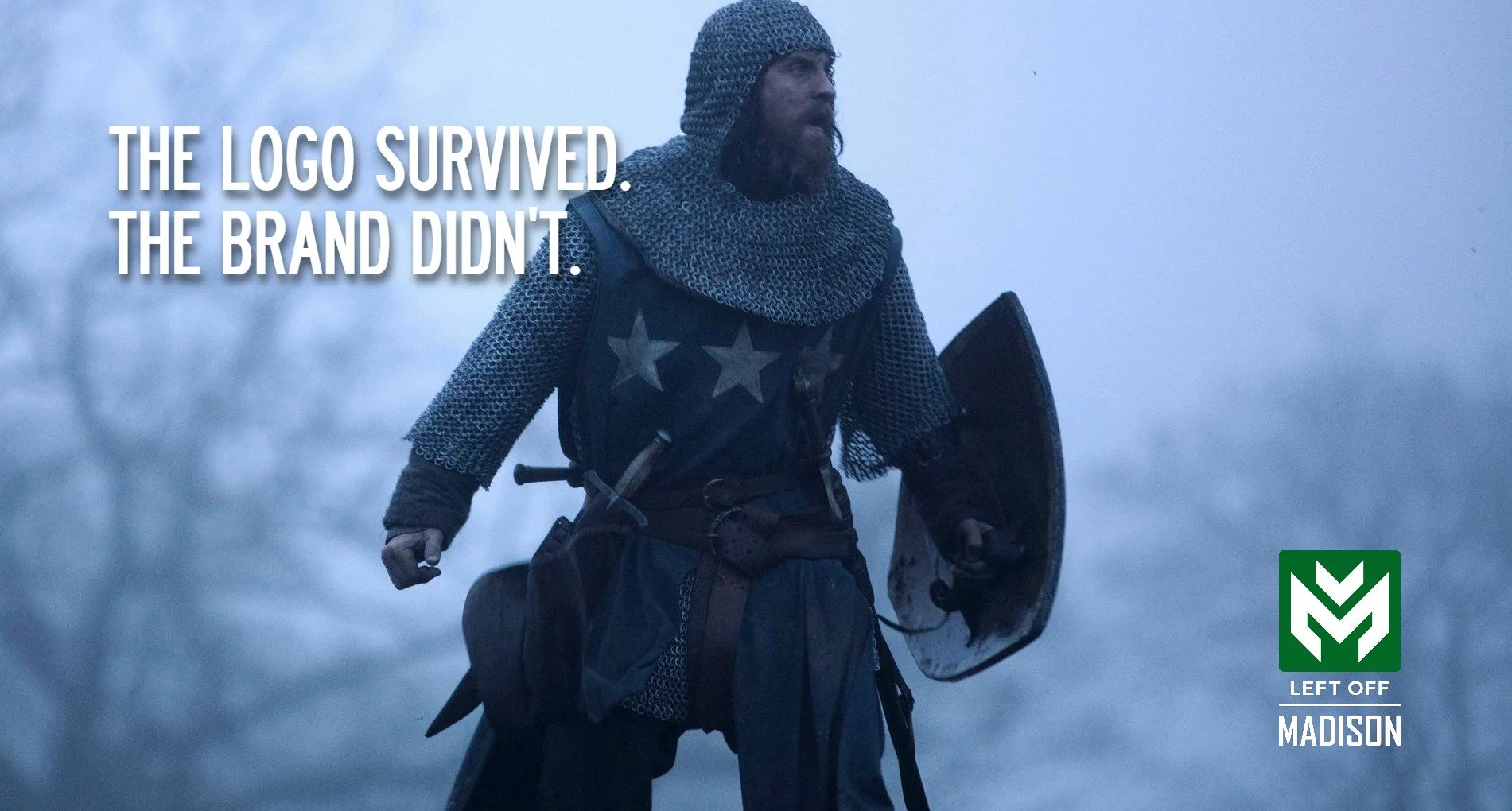
Scottish knight Sir Good James Douglas, a.k.a. the Black Douglas by the English, as portrayed by actor Aaron Taylor-Johnson in the 2018 Netflix movie “Outlaw King.”
For decades, advertising professionals, strategists, and marketers have tried to educate people on the difference between a logo and a brand.
And yet—far too many still don’t get it.
Some are inexperienced marketers.
Some are performance marketers who were never taught brand fundamentals.
Some are executives managing mature brands that were built long before they arrived.
But many still believe the logo is the brand.
It isn’t.
A logo is simply a symbol.
A brand is the meaning attached to it.
That meaning is built over time through repeated experiences, stories, emotions, reputation, relevance, and cultural impact.
And strangely enough, one of the best examples of this distinction may not come from Madison Avenue at all.
It may come from medieval Scotland.
The Douglas Coat of Arms: One of History’s Earliest Brands
Long before modern advertising existed, families, kingdoms, and military leaders used symbols to identify themselves on battlefields, armor, flags, and official documents.
These symbols— coat of arms— served a functional purpose: recognition.
In many ways, they were early logos.
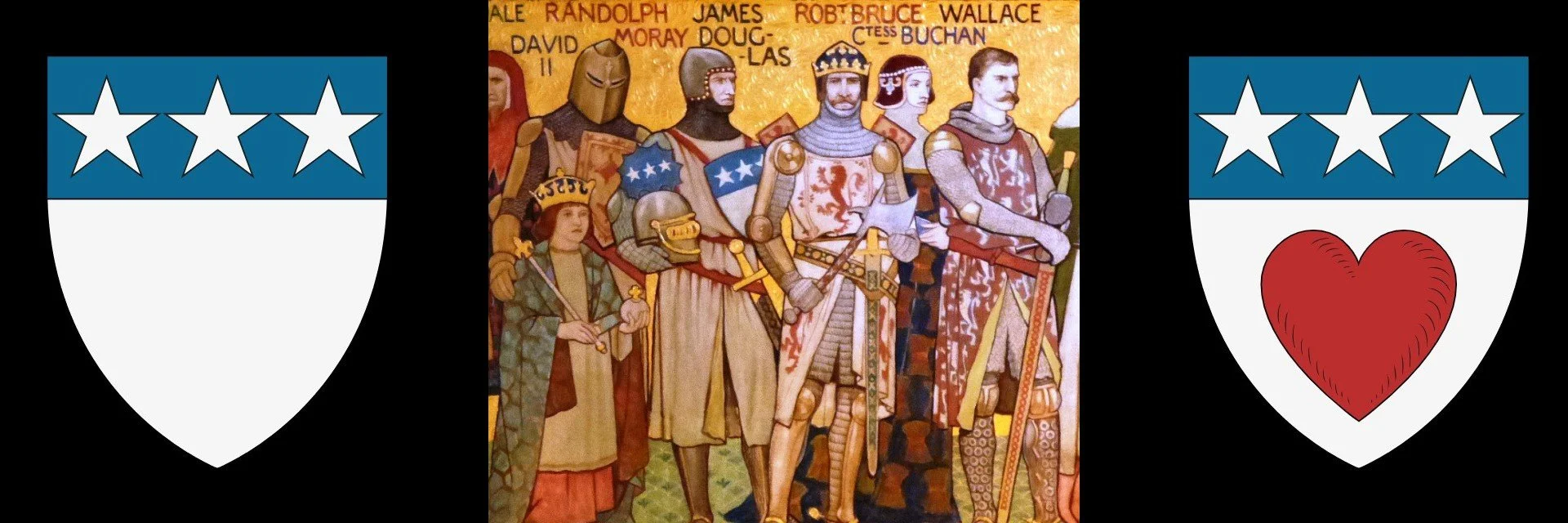
(L-R) House of Douglas, Lords of Douglas ancient arms. James Douglas and Robert the Bruce (first King of Scotland) are depicted in this mural by artist William Brassey Hole (1846-1917). In 1330, the heart icon was added to the ancient arms. It was modified to depict the heart of King Robert the Bruce that James Douglas attempted to take to the Holy Land for burial.
But some evolved into something far greater.
The Douglas clan coat of arms is one of those examples.
The earlier version of the Douglas arms featured the stars and blue stripe associated with Clan Douglas during the late 1200s and early 1300s. Later versions added the crowned heart—one of the most iconic elements in Scottish heraldry.
That heart transformed the symbol from identification into mythology.
According to Scottish history, after the death of the first king of Scotland Robert the Bruce in 1329, Sir James Douglas carried Bruce’s embalmed heart in a silver casket during military campaigns abroad. Douglas died in battle in Spain in 1330, and Bruce’s heart was returned to Scotland.
The heart became permanently embedded in the Douglas coat of arms.
That matters because the symbol no longer represented only a family.
It represented loyalty.
Sacrifice.
Honor.
Warrior culture.
Scottish resistance.
The logo accumulated meaning.
That’s branding.
The Black Douglas vs. The Good Sir James
Sir James Douglas may be one of the clearest examples in history of how branding works psychologically.
To the Scots, he was known as The Good Sir James.
To the English, he was known as The Black Douglas.
Same man.
Two entirely different emotional associations.
Douglas fought alongside Robert the Bruce during Scotland’s wars for independence against Edward I of England and later Edward II of England.
His reputation spread because of what he repeatedly did.
Night raids.
Guerrilla warfare.
Ambushes.
Psychological warfare.
Fearless attacks against occupying English forces.
His tactics were so effective— and his reputation so feared— that English families reportedly used his name to frighten children.
“Hush ye, hush ye, little pet ye,
Hush ye, hush ye, do not fret ye,
The Black Douglas shall not get ye.”
Think about that from a marketing perspective.
That is unaided awareness.
Not only did people recognize the name,
they immediately attached emotion to it.
Fear.
Danger.
Scottish rebellion.
Military brilliance.
That’s no longer a logo.
That’s brand equity.
How Brands Actually Get Built
The Douglas coat of arms did not become powerful because someone designed a beautiful symbol.
It became powerful because generations of people repeatedly experienced what the Douglas clan represented.
Fearlessness.
Independence.
Loyalty.
Resistance.
Military strength.
The symbol itself was merely the shortcut.
Exactly like modern brands.
The Nike swoosh is not the brand.
The Apple logo is not the brand.
The Coca-Cola script is not the brand.
Those are containers.
The meaning inside those containers gets built through years— sometimes decades— of consistent reinforcement.
Advertising.
Product experience.
Cultural relevance.
Innovation.
Reputation.
Storytelling.
Visibility.
Behavior.
Brands are not built through design alone.
They are built through accumulated meaning.
The Dangerous Illusion Many Modern Marketers Live In
Here’s the problem.
Far too many marketers today inherited brands built by people before them.
The hard work was done in the 1960s.
The 1970s.
The 1980s.
The 1990s.
The 2000s.
And instead of continuing to build brand meaning, many organizations simply exploit the remaining residue of it.
They confuse recognition with strength.
They mistake old awareness for modern relevance.
They rely on discounting because they no longer understand how to create demand emotionally.
Some brands today only move product when price drops because the underlying brand equity has eroded.
The logo still exists.
But the meaning weakened.
And many private equity firms buying declining brands make the same mistake: they optimize operations, squeeze efficiencies, cut marketing investment, and harvest what remains of legacy awareness.
They are milking the remnants of prior brand building.
Not creating new brand equity.
That’s not brand building.
That’s brand extraction.
How Brands Fade Back Into Logos
What makes the Douglas example so powerful is that it also demonstrates how brands die.
Over time, the wars that forged the Douglas reputation ended.
Eventually, Scotland and England unified politically under James VI and I.
Clan warfare faded.
Feudal systems weakened.
The emotional tension that gave the Douglas symbol power disappeared.
The stories stopped compounding.
The behaviors stopped reinforcing the meaning.
Over centuries, the coat of arms slowly transformed from a living symbol of power and fearlessness into something else: heritage.
An artifact.
A historical symbol.
A family relic.
Recognition survived longer than relevance.
And eventually the coat of arms became primarily what it was in the beginning: a logo.
The Lesson Modern Marketers Need to Understand
Brands do not remain powerful because they once mattered.
Brands remain powerful because organizations continuously reinforce meaning through action, visibility, innovation, storytelling, and cultural relevance.
Stop doing that—and even the strongest brands eventually decay.
That’s the cycle.
A logo identifies.
A brand signifies.
The Douglas coat of arms became a brand through centuries of action, sacrifice, loyalty, fear, and mythology.
And like all brands that stop reinforcing their meaning, it eventually faded back into being a logo.
That should terrify every marketer sitting on a 30-year-old brand today.