Culture, Sound, and the Signal Most Brands Are Missing
by Robert Douglas
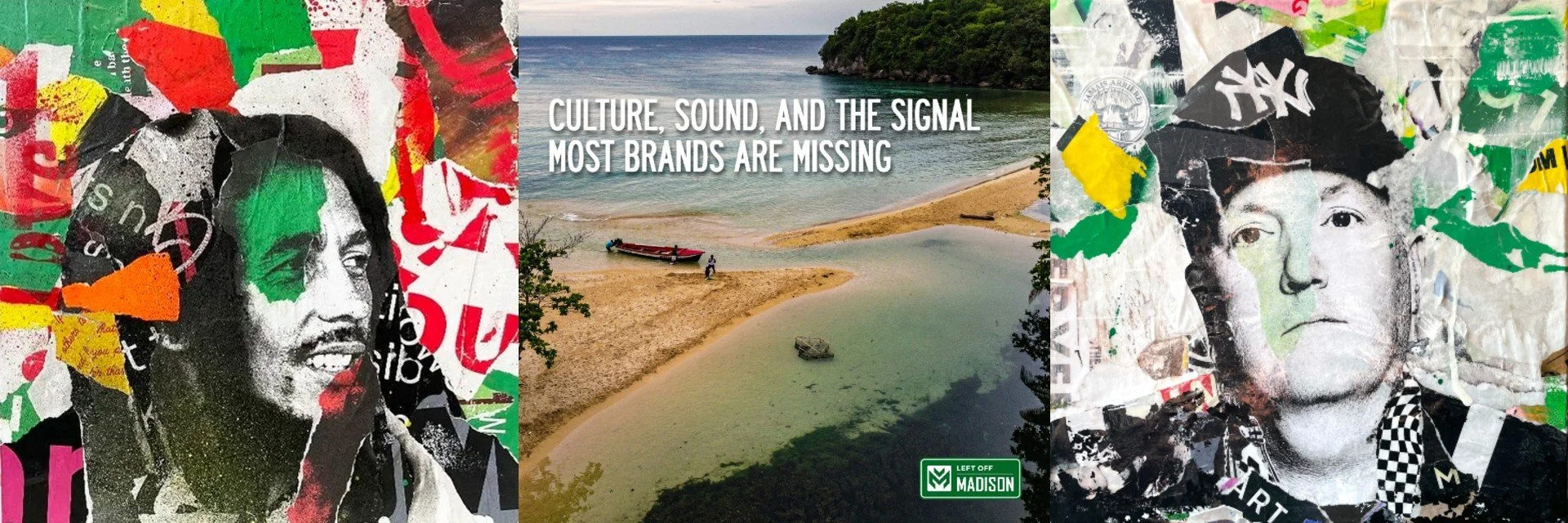
(L-R) “Nesta” by Greg Gennaro, title slide; “Robert” by Greg Gennaro
I didn’t come to this conclusion from a spreadsheet.
I came to it folding sweaters.
While attending college, I was working at United Colors of Benetton at the base of the Empire State Building in New York City. Sunday afternoons— after we closed— meant one thing: the radio stayed on.
That’s where I found Dahved Levy “Rocking You” on Hot 97 or WBLS. I forget.
That was the entry point.
Not a trend report. Not a pitch deck.
A signal as he spun reggae and dancehall music then.
Simultaneously, I got exposed to El General— a foundational pioneer of “Reggae en Español.”
I’ll be honest. I didn’t like it, then.
At the time, it felt off. Different. Not quite what I was used to.
Which, in hindsight, is exactly the point.
Because what I was hearing back then wasn’t a fringe sound. It was the early stages of something that would go on to reshape global music.
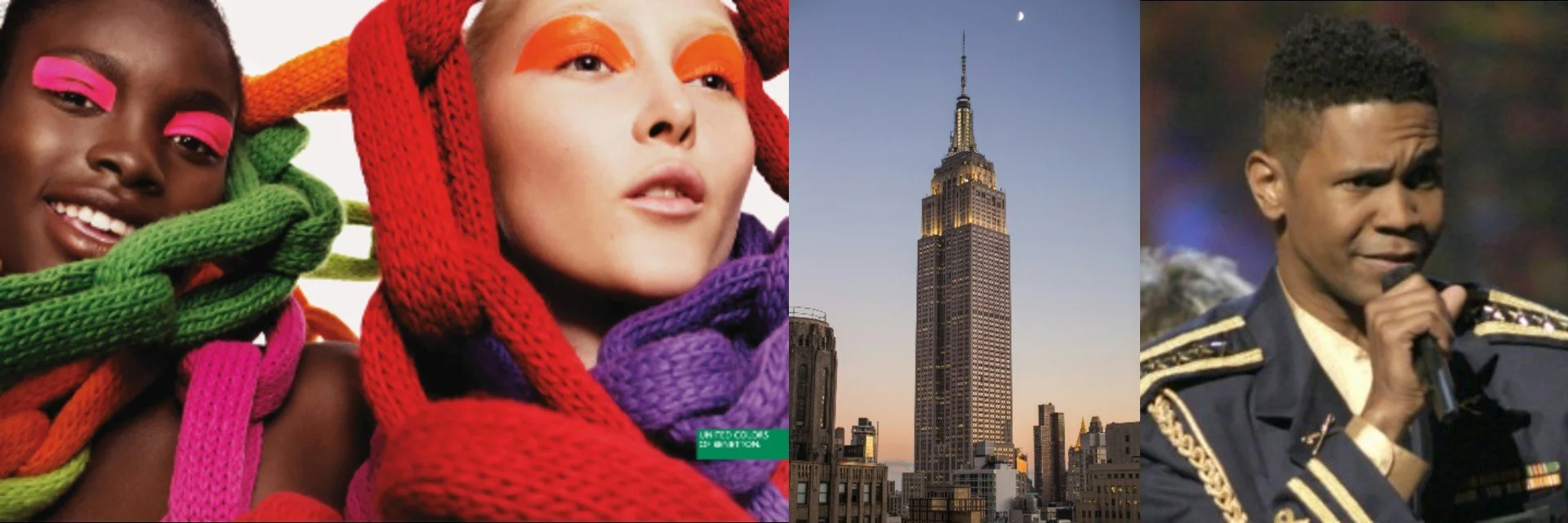
(L-R) United Colors of Benetton ad (circa 1987); the iconic Empire State building in New York City; Reggae en Español musical artist El General.
The Connection Most People Missed
Years later— after a deeper appreciation for both reggae and what the industry now calls reggaeton— I ran into a simple problem: I couldn’t find a place to listen to both together.
So I built one.
A playlist called Reggae Friday on YouTube Music.
Not as a hobby.
As a solution.
Because to me, they were never separate genres. They were part of the same lineage. That lineage has a name:
“Dem Bow.”
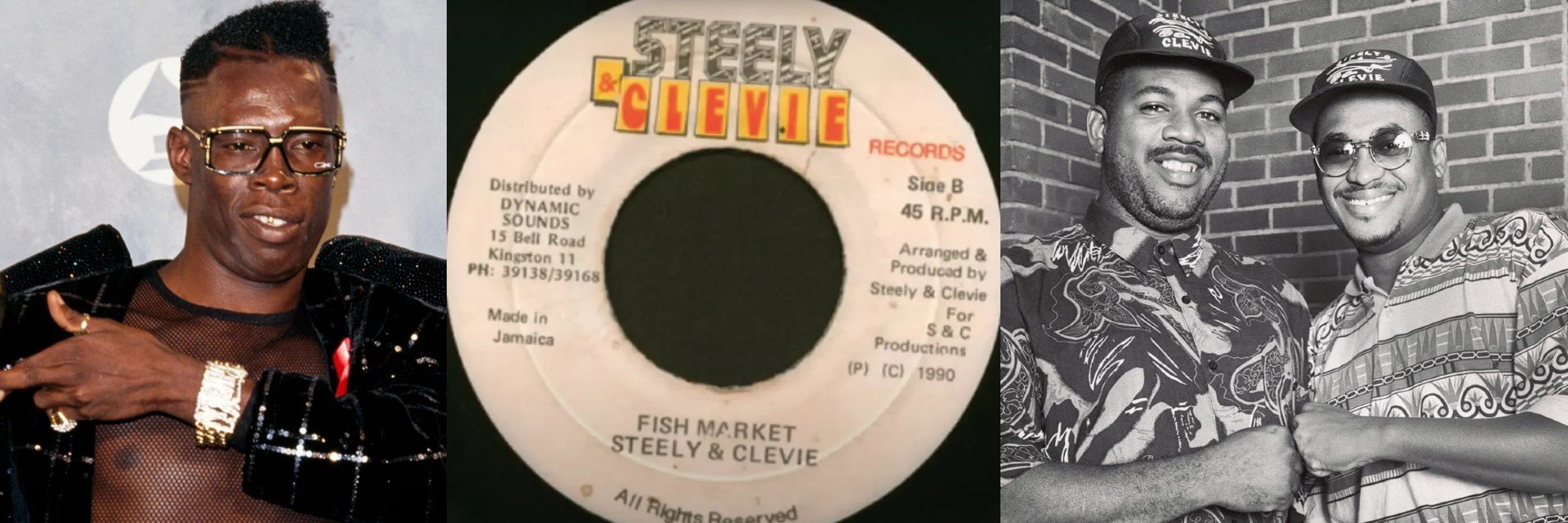
(L-R) 2-time Grammy Award winner Shabba Ranks; center label on the Steely & Clevie “Fish Market” riddim; Steely & Clevie. In September 2025, Steely & Clevie were celebrated at the second annual Grammy Certificate Ceremony in Kingston, Jamaica, for their work on over 14 Grammy-winning and nominated projects including Dawn Penn's "You Don't Love Me (No, No, No)" (1994) and Sean Paul & Sasha's "I'm Still in Love With You" (2002).
The foundational rhythm behind reggaeton traces back to the “Fish Market” riddim created by Steely & Clevie, popularized globally through Shabba Ranks and his track Dem Bow.
That beat didn’t just influence a genre.
It became the backbone of one of the most dominant global music movements today.
So when people separate reggae and reggaeton…
They’re missing the architecture.
From Subculture to Stadiums
Fast forward.
You now have artists like Shakira, Spice, Bad Bunny, J Balvin, Sean Paul, Shenseea, and Karol G operating at global scale:
Billions of streams
Stadium tours
Cultural dominance across platforms
At the same time, the influence of artists like Major Lazer, Protoje, Lila Iké, and the Bob Marley family legacy (Damian, Stephen, Skip, YG, etc.) continues to echo across modern audiences.
I’ve seen it up close.
At one point, I curated a performance for dancehall artist Chi Ching Ching on the rooftop of our office in lower Manhattan.
He didn’t show up alone. He brought his label boss—and a surprise guest: Sean Paul.
That wasn’t a “moment.” That was a reminder: This culture travels.
And when it shows up, people show up with it.
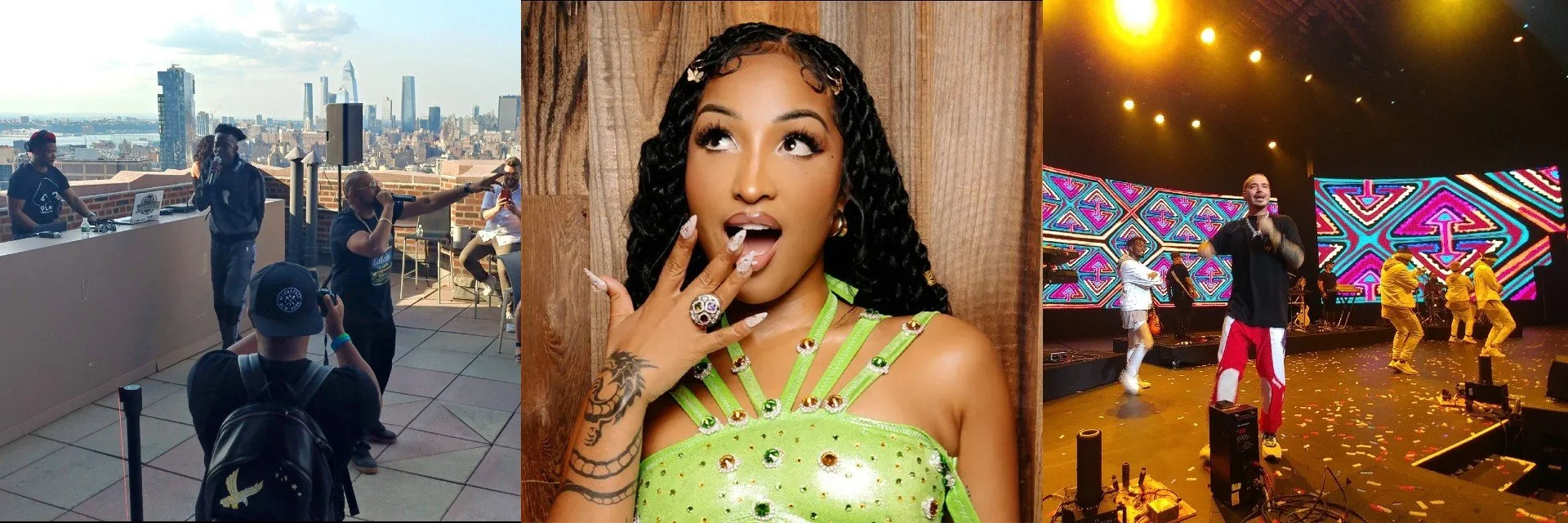
(L-R) Sean Paul and Chi Ching Ching with DJ Norie atop our offices in New York City; dancehall reggae musical artist Shenseea; reggaeton music artist J Balvin performing for Telemundo upfront media conference.
The Science of Why It Works
Here’s where it gets more interesting—and more relevant for marketers.
There’s a reason this music doesn’t just spread.
It sticks.
Most reggae and Caribbean-rooted music sits in the 60–90 BPM range— roughly aligned with a resting human heart rate.
The impact:
Heart rate slows
Breathing stabilizes
The body relaxes
Layer in rhythm:
Predictable
Repetitive
Easy for the brain to process
Then add bass:
Low-frequency sound that’s felt, not just heard
Creates physical immersion
Together, this creates something called entrainment— where your body begins to sync with the rhythm.
Translation:
The music doesn’t just play in the background. It changes your state.
Now combine that with decades of cultural association— warmth, escape, freedom— and you get a powerful equation:
Biological alignment + cultural meaning
That’s not a vibe. That’s a system.
The Missed Opportunity for Brands
Now step back and look at how most brands use music.
As decoration.
A background track.
A finishing touch.
A safe choice.
Meanwhile, they’re trying to:
Break through clutter
Build emotional connection
Drive recall and preference
And they’re ignoring a sound that:
Operates at global scale
Drives cultural participation
And physically affects how people feel
That’s not a small miss. That’s a strategic blind spot.
The Question CMOs Should Be Asking
If you’re responsible for growth, here’s the question I’d put on the table:
Why isn’t your brand engineered to sound like something people want to feel?
Not just in one campaign. But consistently.
Because reggae and Caribbean-rooted music aren’t just globally popular.
They’re globally effective.
Final Thought
I didn’t set out to make a point about marketing when I first heard Dahved Levy on a Sunday afternoon.
But looking back, the signal was there the whole time.
Culture was moving.
The industry just didn’t recognize where it was coming from.
And today, many brands still don’t.
P.S.
We pulled a quick comparison of select pop artists versus Caribbean and Latin artists using YouTube Music monthly audiences and Instagram followers (see chart).
A few things stood out:
Shakira, Spice, and Bad Bunny all land in the Top 10 on YouTube Music
Shakira, Karol G, and Maluma show up in the Top 10 on Instagram
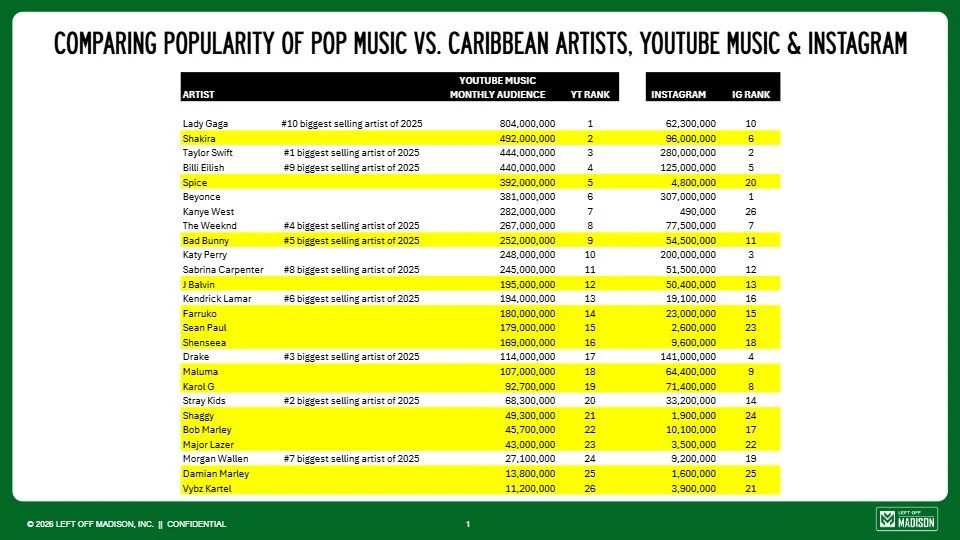
Source: YouTube Music and Instagram, 04/30/2026
But the more interesting signal isn’t who ranks where.
It’s how inconsistent the rankings are.
Lady Gaga is #1 on YouTube… and #10 on Instagram
Drake is #17 on YouTube… and #4 on Instagram
Which is a reminder: Audience size and audience value are not the same thing.
We tend to judge influence by follower count.
But that’s not necessarily where attention is deepest— or where revenue is generated.
So if your media strategy— or your definition of “scale”— is anchored to a single platform…
You’re not looking at culture.
You’re looking at a slice of it.
This article is dedicated to two people who I consider the best in the industry in area of brand identity in audio for marketing: Paul Greco and Maurice Bernstein.