The Data Pointed Us Somewhere. People Told Us Why.
Five real-world examples of how consumer conversations changed the advertising decision.
By Rob Douglas

In The More We Rely on AI, the More We Need to Talk to People, I argued that marketers need to make qualitative consumer research a priority as AI becomes a bigger part of their work.
Here is what that looks like in practice.
A research report can identify a promising audience. It can tell us what people buy, which media they consume, and which interests they share. AI can help organize that information and surface patterns worth exploring.
But a pattern still leaves us with questions. Why does it matter? What does it mean in someone's life? What would make that person give our brand a chance?
Qualitative research— one-to-one interviews, small-group discussions, and observation— helps us explore those questions. It gives us room to ask “why,” follow an unexpected answer, and reconsider the assumptions we brought into the room.
When competing brands use the same syndicated research sources and similar analytical tools, they can arrive at remarkably similar audience definitions. The opportunity is to go further: to understand something that changes the advertising decision.
At Left Off Madison, we use quantitative tools such as MRI-Simmons and AI within our 5-C process: Consumer, Culture, Category, Competition, and Company. Conversations with prospective customers help us investigate what the numbers suggest and what they leave unexplained.
The following five examples draw on work by our team. They illustrate a discipline that matters in the AI era, including on assignments that predated today's generative AI tools.
The challenge → What the data revealed → What we learned about people → The advertising decision → The evidence.
Technics: Finding the culture inside an audience
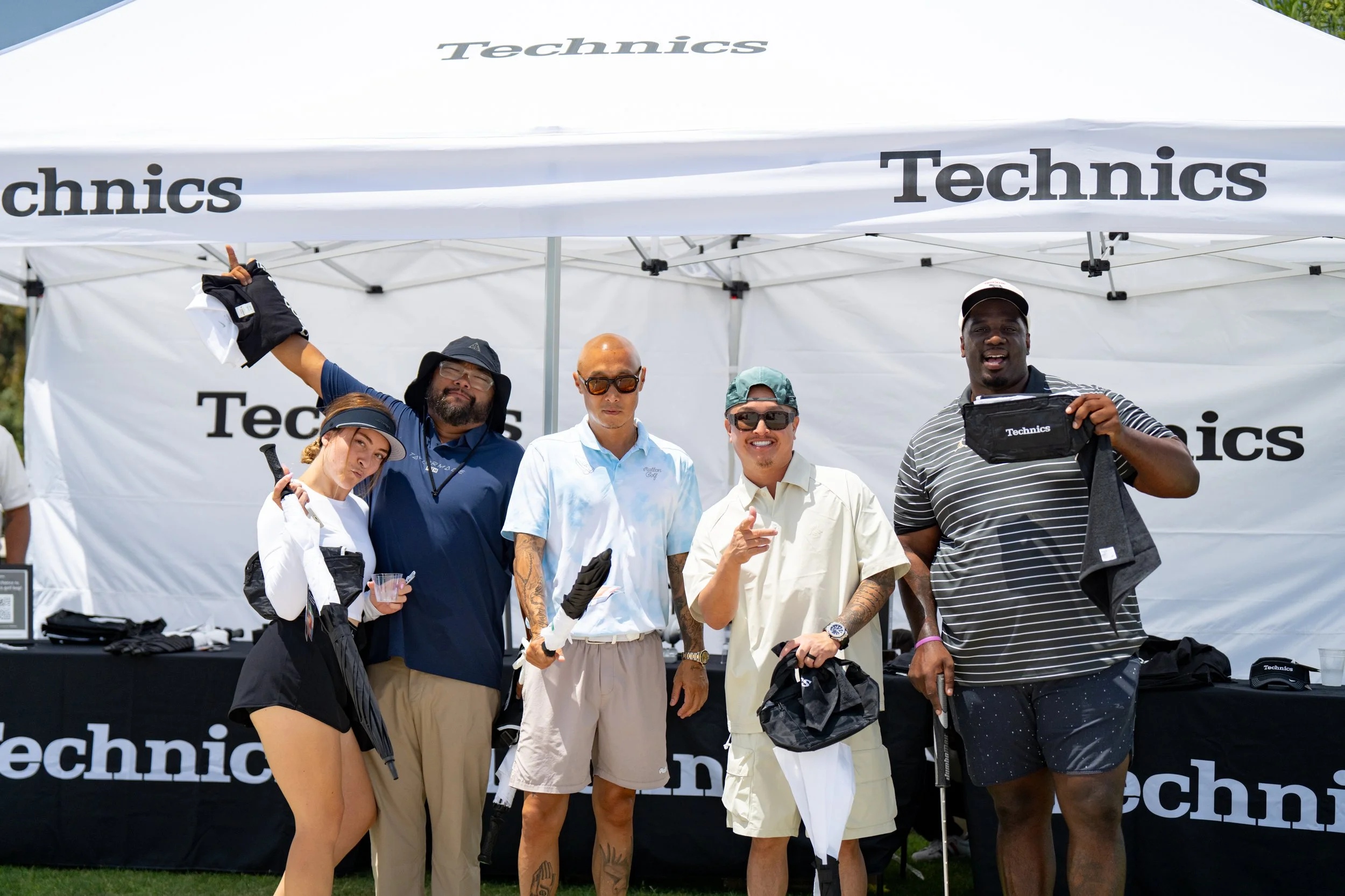
Technics at the HYPEGOLF event in Los Angeles. (L-R) female attendee, DJ Franzen, Left Off Madison’s Bee Nguyen, Nick Ngo the COO of dance troupe Jabbawockeez, actor and entrepreneur Donovan Carter
The challenge: Build demand for premium earbuds against Apple, Sony, Beats, and other much larger advertisers.
What the data revealed: MRI-Simmons helped us define an affluent, music-oriented audience. It was too broad for our budget. Looking deeper, we identified interests including golf, Formula One, hockey, and live rock concerts. Golf represented the largest of those opportunities in our analysis.
What we learned about people: Conversations helped us understand the cultural changes within golf: its growing connections to music, professional athletes, fashion, and a new generation of players. The opportunity became more specific than simply advertising earbuds to golfers.
The advertising decision: Position Technics within that modern golf lifestyle, connecting premium audio to the audience's wider interests. Golf shaped the creative, media, and partnerships, including Hypegolf activations.
The evidence: The program developed from an initial golf event test into broader activations. The case study reports improving direct-to-consumer ROI and a retail sales halo.
The lesson: An audience affinity becomes more useful when you understand the culture behind it.
Explore the Technics case study →
Ajinomoto Gyoza: Turning preparation into an occasion

Screengrab from Ajinomoto gyoza TV ad that we had created.
The challenge: Persuade Costco shoppers unfamiliar with Ajinomoto to try frozen Japanese gyoza that required more preparation than simply heating and serving.
What the data revealed: Our analysis identified an attractive overlap between Costco shoppers and the brand's prospective audience: relatively affluent households, larger shopping needs, and openness to trying products.
What we learned about people: Conversations brought home entertaining into focus. Dinner parties, game nights, and casual gatherings gave the product a role beyond another weeknight meal. Preparation could become part of the enjoyment.
The advertising decision: Put the social occasion at the center of the story. “Cook 'em. Flip 'em. Enjoy 'em.” made preparing and sharing the gyoza a memorable group experience, supported by media around participating stores.
The evidence: The launch reached 2.6 times Costco's required sales within two weeks and subsequently 3.8 times, according to the case study. Distribution expanded into additional regions and nationally.
The lesson: Understanding the occasion can change how you present a perceived product barrier.
Explore the Ajinomoto Gyoza case study →
Cadillac: Looking beyond a broad demographic label
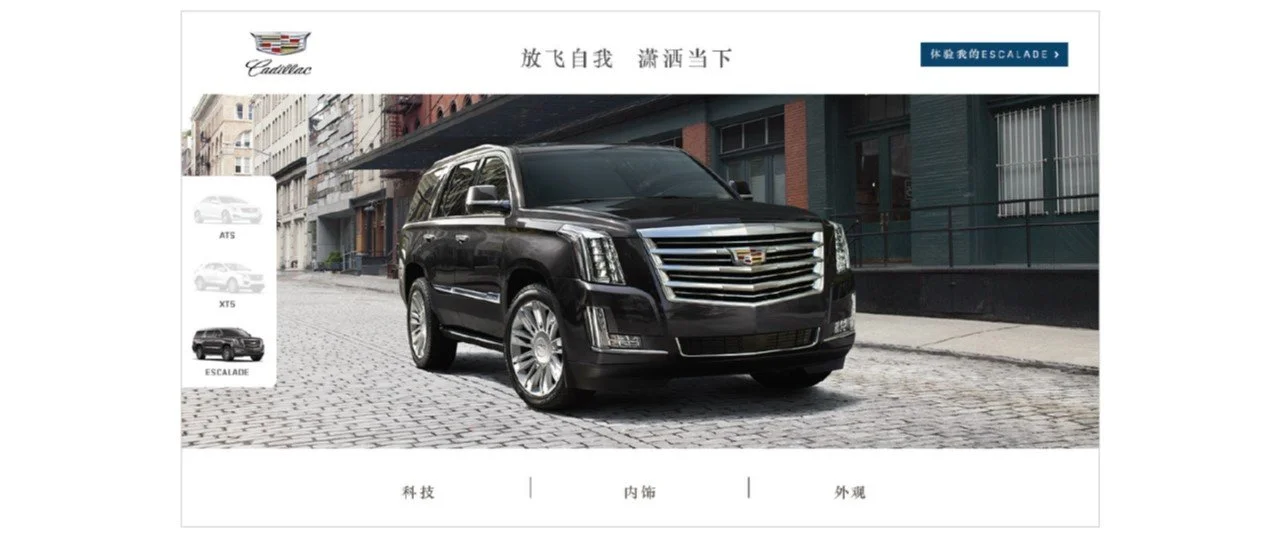
Screengrab of an interactive homepage takeover used in the ad campaign
The challenge: Identify additional prospects beyond Cadillac's established marketing audience.
What the data revealed: Quantitative analysis suggested an opportunity among Asian consumers. But the available sample became less reliable when we tried to examine individual communities. The broad category could not supply the cultural detail needed for a campaign.
What we learned about people: Conversations helped us explore Cadillac's associations with prestige, bold design, and American luxury among affluent Chinese prospects. They also highlighted the relevance of Chinese-language media to people the general-market campaign might miss. Those findings informed a hypothesis about a specific audience; interviews alone could not quantify its purchase propensity.
The advertising decision: Develop a Chinese-language campaign for affluent next-generation Chinese Canadian luxury buyers (the fuer dai), adapting existing assets and selecting relevant in-language media.
The evidence: The campaign exceeded comparison benchmarks for click-through and video completion, including relevant Cadillac and Buick campaigns.
The lesson: A demographic signal can open an investigation. Cultural understanding helps make the response relevant.
Explore the Cadillac case study →
LUMIX: Understanding how photographers discover their next camera
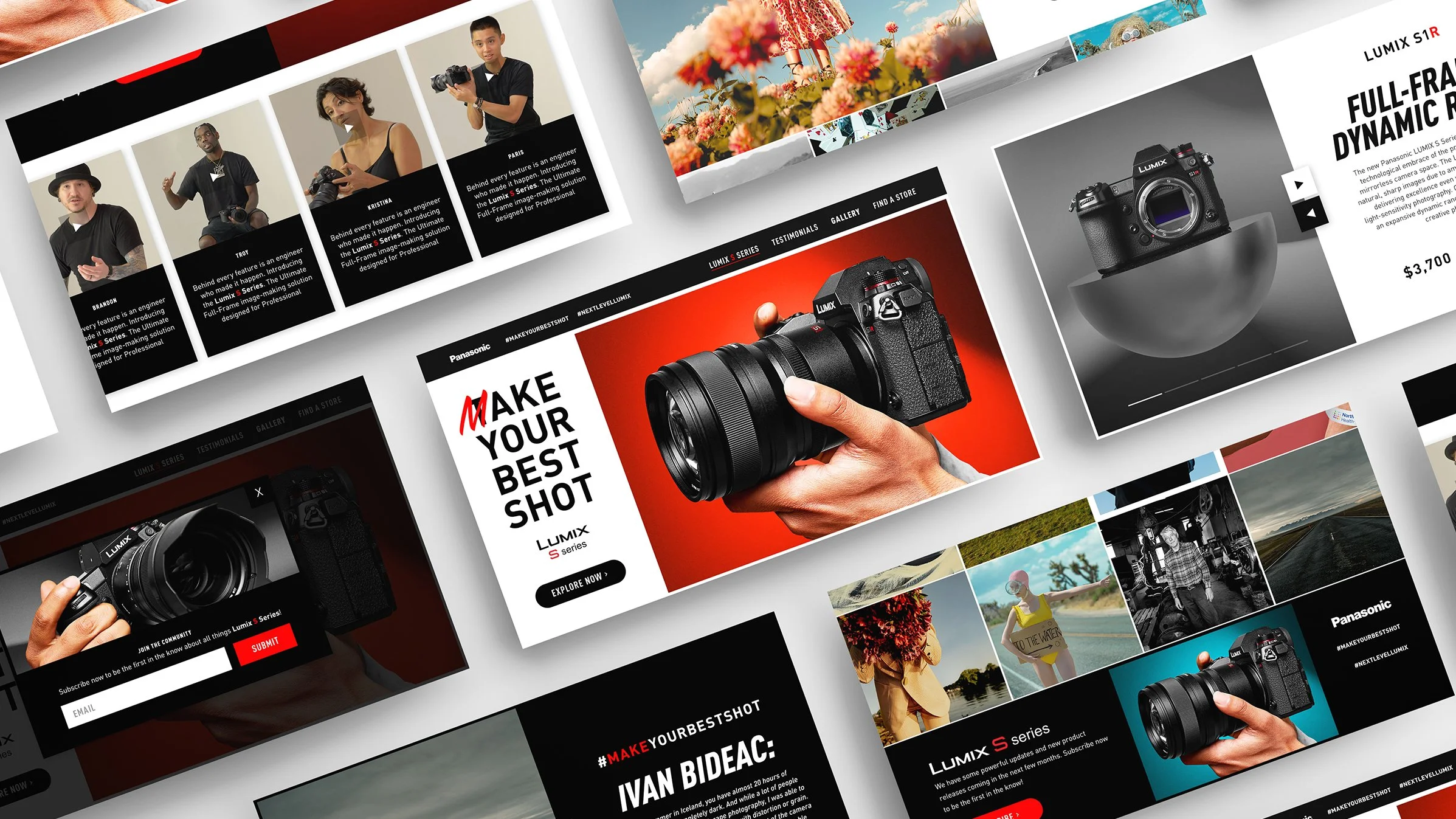
Collective of assets generated by Left Off Madison leasers for the LUMIX ad campaign.
The challenge: Earn credibility for the premium S-Series against entrenched camera brands with a constrained budget.
What the data revealed: Research into serious amateur and professional camera buyers defined demographics and media habits, but left us with a broad audience spanning numerous photographic disciplines.
What we learned about people: Photographers wanted to see what a camera could produce. They described discovering compelling images in publications, checking the photographer's credit, and researching the equipment behind the work. That revealed both a creative opportunity and a path to discovery.
The advertising decision: Build “Make Your Best Shot” around photographers' output. Place the work in environments where creators already sought inspiration, connecting the image, its maker, and the equipment.
The evidence: The campaign delivered more than 47 million targeted impressions and was followed by years of additional LUMIX assignments. Those are measures of delivery and an ongoing client relationship, rather than proof of a specific market-share gain (that simply isn’t available).
The lesson: Learning how people discover and evaluate products can change both the creative and the media plan.
Explore the LUMIX case study →
Just Bare: Giving shoppers a reason to care about the source

The collective of 5 actual Just BARE chicken growers who were featured in our ad campaign.
The challenge: Build a premium fresh chicken brand in a crowded category while coordinating advertising with retailer-by-retailer distribution.
What the data revealed: Quantitative research identified established poultry-brand buyers, retail preferences, and consumers interested in organic food. It helped define prospects but did not yet provide a distinctive story.
What we learned about people: Conversations revealed interest in where food came from, how it was raised, and the people responsible for producing it. That gave us a more meaningful way to discuss the product.
The advertising decision: Build the campaign around “Who Makes Your Food.” Packaging codes identified sourcing areas encompassing multiple growers, providing a regional connection to the food's origins rather than a promise to identify one individual farm. Media followed retail availability, giving shoppers a nearby place to buy.
The evidence: The program expanded across retail chains from a regional toward a national advertising presence. The sourcing story provided a consistent creative foundation as distribution grew.
The lesson: A product detail becomes a stronger advertising asset when it answers something people care about.
Explore the Just Bare case study →
Make room for the next question
Across these assignments, consumer conversations helped change something concrete: the audience, the occasion, the language, the creative, or the media environment.
That is the standard I believe marketers should require of research. What decision will we make differently because of what we learned?
AI can help us prepare better questions, organize interview material, and explore competing explanations. Quantitative research can help size opportunities and test whether findings extend to a larger population. Qualitative research lets us explore the experience behind a response—and ask the next question while the person is still in front of us.
These methods strengthen one another. A handful of conversations does not establish how an entire market thinks. Equally, a large dataset does not relieve us of the responsibility to understand the people it represents.
Before approving the next brief, ask your team: Who have we spoken to? What surprised us? What did we change as a result?
At Left Off Madison, we connect that understanding to strategy, creative, media, and production. A focused audience or positioning assignment can be the starting point.
What do you need to understand about your customer before you spend your next marketing dollar?