By Rob Douglas, Co-founder & CEO of Left Off Madison
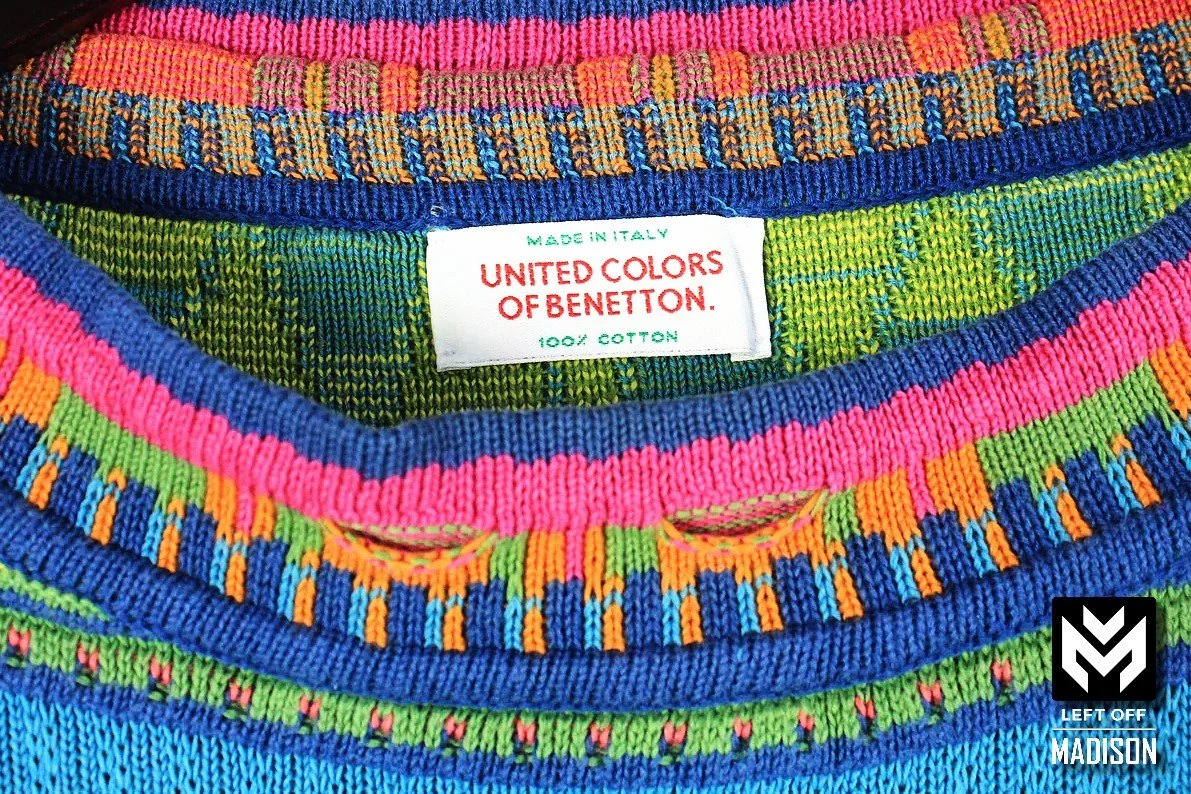
At the base of the Empire State Building, I sold shirts to people who wanted everyone to know they were wearing Benetton. At 62nd and Lexington, I sold clothes to women who went home and cut the Benetton labels out.
I was in college, and somehow I was doing the buying for both stores. If you’re wondering what brilliant career move put me in that position, my girlfriend and a few friends left the Gap on 34th Street to work at United Colors of Benetton. I followed.
I liked the mystique of Benetton. I also thought the windows could work harder, the merchandise could be easier to shop, and we could do a better job of taking care of people once they came through the door. Inch by inch, I took those things on. When the manager had to leave New York for a few months, I took over. Eventually I was responsible for two stores, both were doing well enough to get the attention of the parent company, and there I was in the Benetton showroom deciding what New Yorkers would want to wear eight or nine months from now.
Today I run an independent ad agency. A surprising amount of the education traveled with me.
1. “The New York customer” is a fine way to buy the wrong clothes.
At the Empire State Building, tourists came in for logo tees, sweatshirts and rugby shirts. People who worked upstairs bought sweater sets, skirts and dress pants. At 62nd and Lex, neighborhood regulars— including Brooke Shields shopping for herself and Carolina Herrera shopping for her daughters — told me what they’d seen on trips to the Hamptons or Europe and what someone had worn to a cocktail party. Some had figured out that our collection gave them the designer look they wanted at a price that worked for them. Hence the scissors.
Imagine putting all those people in a strategy deck under “fashion-conscious New Yorkers.” Technically accurate. Now you have to spend your own money stocking the shelves. Which shirts are you buying? What colors? What sizes? That’s about how specific I want us to get when we define an audience at Left Off Madison.
2. If she wants twelve, for God’s sake help her find twelve.
The “Benetton Way” was to mix the seasonal fashion pieces with the classics. A solid sweater might sit beside a floral print that went beautifully with it. Lovely idea. Except we had customers who would buy eight or twelve classic tops at a time, and even the people who worked there had trouble finding all the colors.
One season I put the classic tops together in their own section and organized them by color. Boom. A customer could see the whole selection, and we started moving classics by the armful.
I think about that whenever a client asks how we can generate more demand. Sometimes somebody is already standing there, money in hand, and we’ve made it unnecessarily difficult for her to give it to us.
3. Let them mess up the sweaters.
On a busy Saturday, we might have two or three people helping customers and another two or three restocking and folding. We were meticulous. So meticulous, in fact, that some shoppers hesitated to touch anything. They’d caught attitude for disturbing a display at another Benetton and figured they knew the rules.
“Don’t worry about it,” we’d say. Sometimes we’d pull the sweater out for them ourselves. They could feel it, unfold it, hold it up, try it on. We knew how to fold.
There’s a version of this in a creative presentation. Once in a while, a client wants to pull an idea apart and see how it works. I remember what it felt like to stand on the other side of that sweater.
4. Before you declare a flop, try sending it uptown.
I bought sweater shawls for both stores. At the Empire State Building, they sat. My then-girlfriend, who was running the Lexington Avenue store, told me she’d sold every one of hers and wanted to know if she could have mine.
I sent them uptown. She sold those out, too.
Had I looked only at the combined sales, I might have placed a perfectly reasonable, thoroughly wrong order the following year. Instead, I bought a ton for Lex and a few for 34th Street. Whenever campaign results come in, I still want to know where something worked and with whom before anybody starts moving money around.
5. Putting it on the shelf is only part of the job.
Word got around Benetton about the size of my next shawl order. Other stores in the city decided to carry them, too. They gave them little priority at first, and the shawls moved slowly. Meanwhile, 62nd and Lex blew through its collection. We still had customers looking for one, sometimes in more than one color.
I’ve spent a fair amount of my advertising career helping brands get products moving at retail. Getting a buyer to say yes is a big day. The shopper still has to come in, see the thing and decide she wants it. Somebody owns that part of the launch, too.
6. Apparently, fall starts on the Fourth of July.
At 62nd and Lex, I’d turn the store over to spring and summer around Valentine’s Day. By about the Fourth of July, we’d be into fall and winter. Spend enough time talking to women who shop ahead of season and it starts to feel perfectly reasonable to be thinking about fall and winter coats while everybody else is figuring out where to watch the fireworks in their bathing suit.
That’s a question I like to ask when we plan campaigns. When does someone start thinking about buying this? By the time the obvious date shows up on our marketing calendar, our customer may already own the coat.
7. Ask the people who worked Saturday.
Before I went to the showroom to buy the next collection, I’d get the staff together after work. What were the best sellers? What sat there? What had they seen that I might have missed? I had my own read, but I was about to commit to merchandise we wouldn’t see for another eight or nine months. I wanted the benefit of every shift I hadn’t worked.
It’s one reason I like hearing directly from the people doing the work at our agency. Spend Saturday helping customers find their sizes, then tell me what you saw. You’ve earned a voice in what we buy on Monday.
8. A guy can love your overcoat and still have zero interest in your blazer.
We tried dressier menswear. Sport jackets, dress shirts, pants. I could see the logic when I looked at the collection. The men shopping our stores had other ideas. They bought quilted jackets, wool overcoats, denim, tees and enough variations on the sweater to keep those folding skills sharp.
Established brands run into this all the time. People can have tremendous affection for you and fairly specific ideas about what they want from you. Before we ask a customer to follow a brand somewhere new, I want to know what he came in for in the first place.
9. Somebody has to do the windows.
I cared about keeping our window displays sharp, dynamic and interesting enough to get somebody on 34th Street to give us a look. I started paying attention to them while somebody else still had the manager title. Same with the organization, the merchandising and the service. By the time the manager had to leave town, I’d already taken responsibility for a fair amount of what happened in that store.
That’s a quality I value in an independent agency. The person who notices something could be better and takes a crack at fixing it is often the person you trust with the keys.
10. Everybody hears the song for the first time sometime.
Play Luke Combs’ version of “Fast Car” and you can have two people in the room having entirely different experiences. One knows every word from Tracy Chapman. The other just heard a song they love and wants to know what it’s called. Same goes for Paramore’s take on “Burning Down the House.”
I think about that when we work with established brands like 7UP, Ajinomoto, LUMIX or Technics. A longtime customer brings years of experience and affection to the next thing the brand does. Somebody else gets to discover the whole damn thing today. That’s a terrific creative opportunity, provided we give both people a reason to care.
Which brings me back to those labels. One customer wanted Benetton across the front of her shirt. Another loved the clothes enough to buy them and took scissors to the evidence. I was happy to have both customers. I just had to remember which store I was buying for.
And if either one needed a different size on 34th Street, the stockroom was two flights down. My legs have never been in better shape.